Interactive Ball Walls: Turn an Empty Wall Into the Busiest Corner of the Venue
Floor space is the most expensive thing in a play venue — walls are usually free. A ball wall uses that wall to run balls through gears, tubes, lifts and race tracks, keeping children in one place for far longer than most floor equipment. Three themed editions, powered or unpowered.
Why walls outperform floors in play economics
A ball wall converts vertical space into play time. Children follow a ball from the moment they drop it — through a transparent tube, up a lift, around a loop — and the loop restarts automatically, which is why a single wall can hold attention for twenty minutes without staff involvement.
The three editions solve three different venue problems: Engineering Workshop for STEM positioning, Ball Show for counting and colour-based play with younger children, and Snow Mountain for a calm, photogenic transparent-tube centrepiece. All are modular, so a wall can grow panel by panel.
Ball Wall Series — Themed Editions
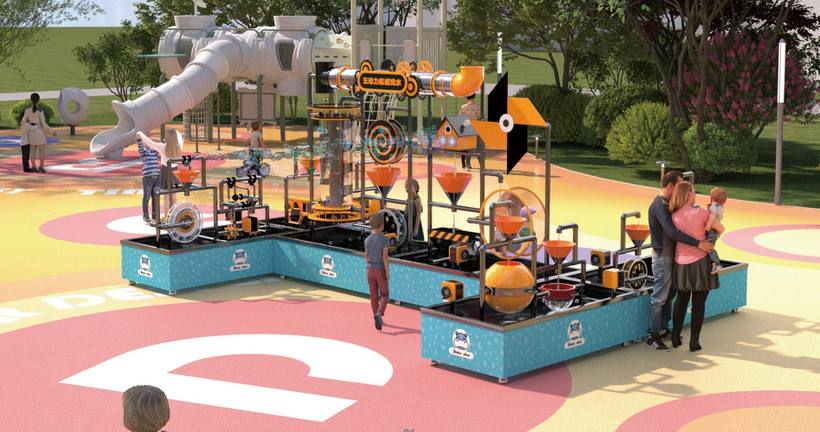
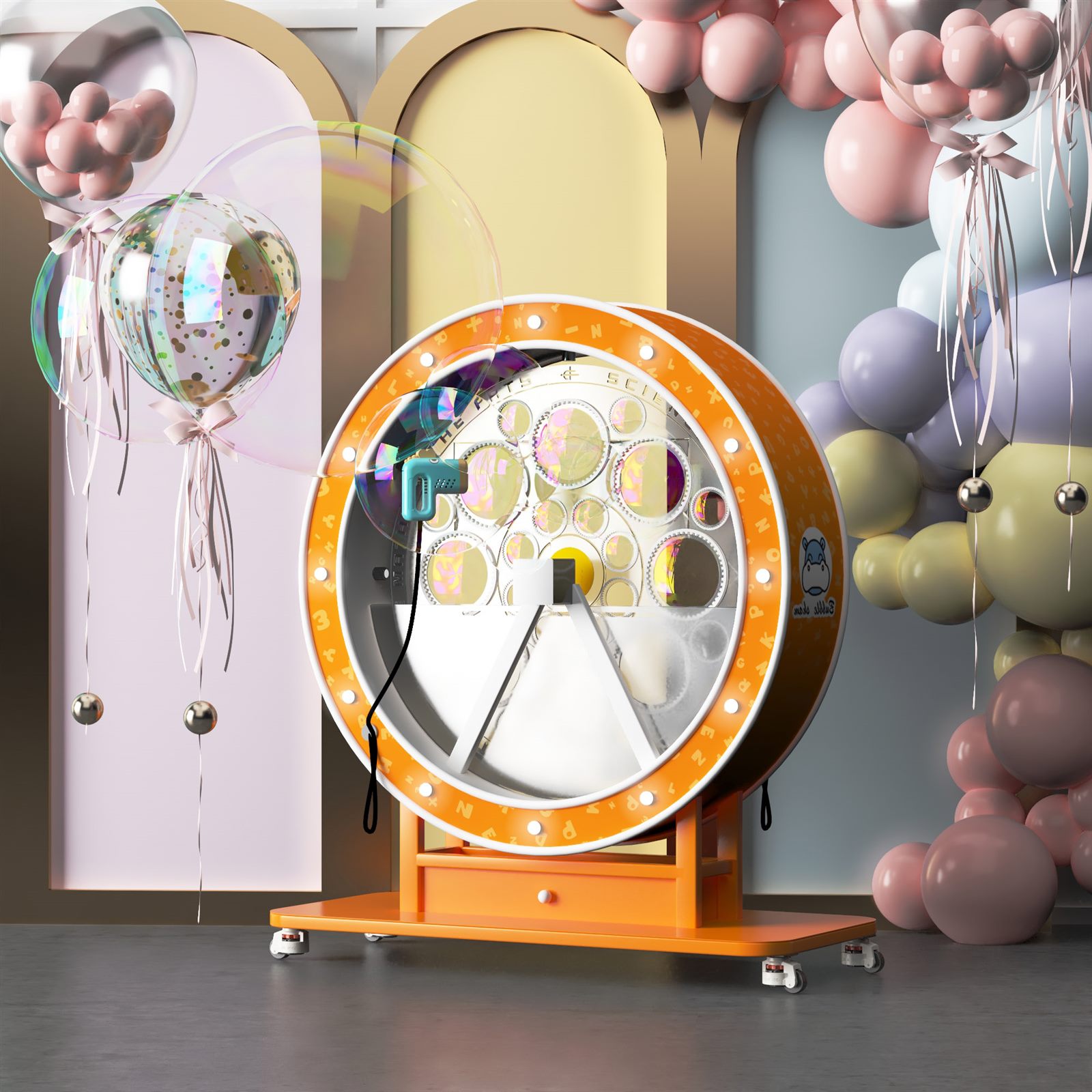
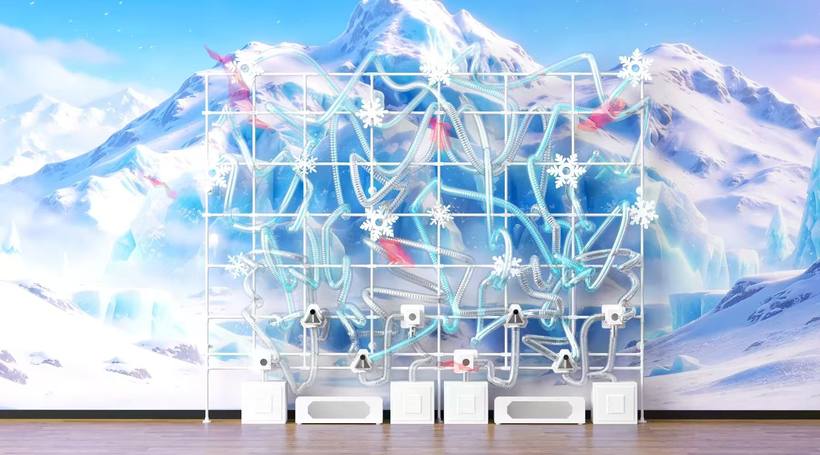
MINI ball walls in powered and unpowered versions, in three signature themed editions: Engineering Ball Wall with gears, cranks and conveyor runs; the pastel Ball Show Wall with counting loops, ball lifts and race tracks; and the Snow Mountain Wall with an ice-blue transparent tube maze.
| Models | 15+ designs |
| Themed editions | Engineering Workshop / Ball Show / Snow Mountain |
| Versions | Powered / unpowered |
| Mounting | Wall-mounted or standalone transparent |
| Examples | Gear, tube, fork, windmill, turntable, racing, robot, counting loop, spiral, truss |
| Materials | HDPE, PC, acrylic, steel frame |
- Engineering edition: hand-crank gears and conveyor belts drive the ball run
- Ball Show edition: counting rails, ball lift and race tracks — numbers become play
- Snow Mountain edition: transparent ice-blue tubes let kids follow every ball's journey
- Turns unused wall space into interactive play with zero floor footprint
- Powered and unpowered versions to match budget and maintenance capacity
- Embeds neatly into soft-play castles and themed walls
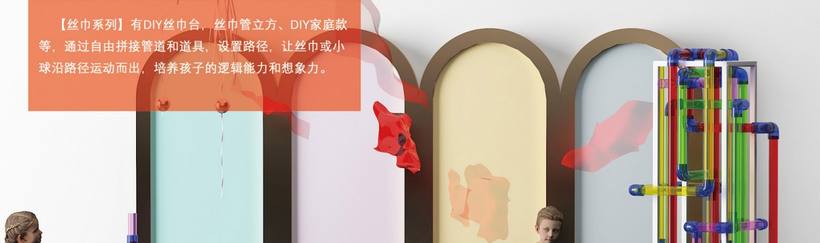
Silk Scarf Series — Air-Flow Logic Play
DIY scarf tables, scarf tube cubes and a home edition. Children connect pipes and watch scarves or balls travel through the air flow — building logic, spatial thinking and imagination with no moving parts to maintain.
| Models | DIY scarf table, tube cube, home edition |
| Play mode | Air-flow tube building |
| Materials | HDPE, PC tubes, transparent panels |
| Skills | Logic, spatial reasoning, creativity |
| Age group | 3–10 years |
| Best for | Kindergartens, science corners, homes |
- Children design their own pipe routes and test them
- Visible air flow makes cause and effect instantly clear
- Quiet, clean play — ideal for classrooms and libraries
- Home edition brings the experience to family living rooms
- Connector sets expand the system over time
Twelve panels, one 1.2 m module
Every panel is built on the same 1.2 x 1.2 m module, so panels clip together into a run of any length — a single wall in a corner or a full themed gallery. Choose the mechanisms you want and we supply the wall layout, fixing plan and ball-return specification.
| # | Panel | What the ball does | Module size | Materials |
|---|---|---|---|---|
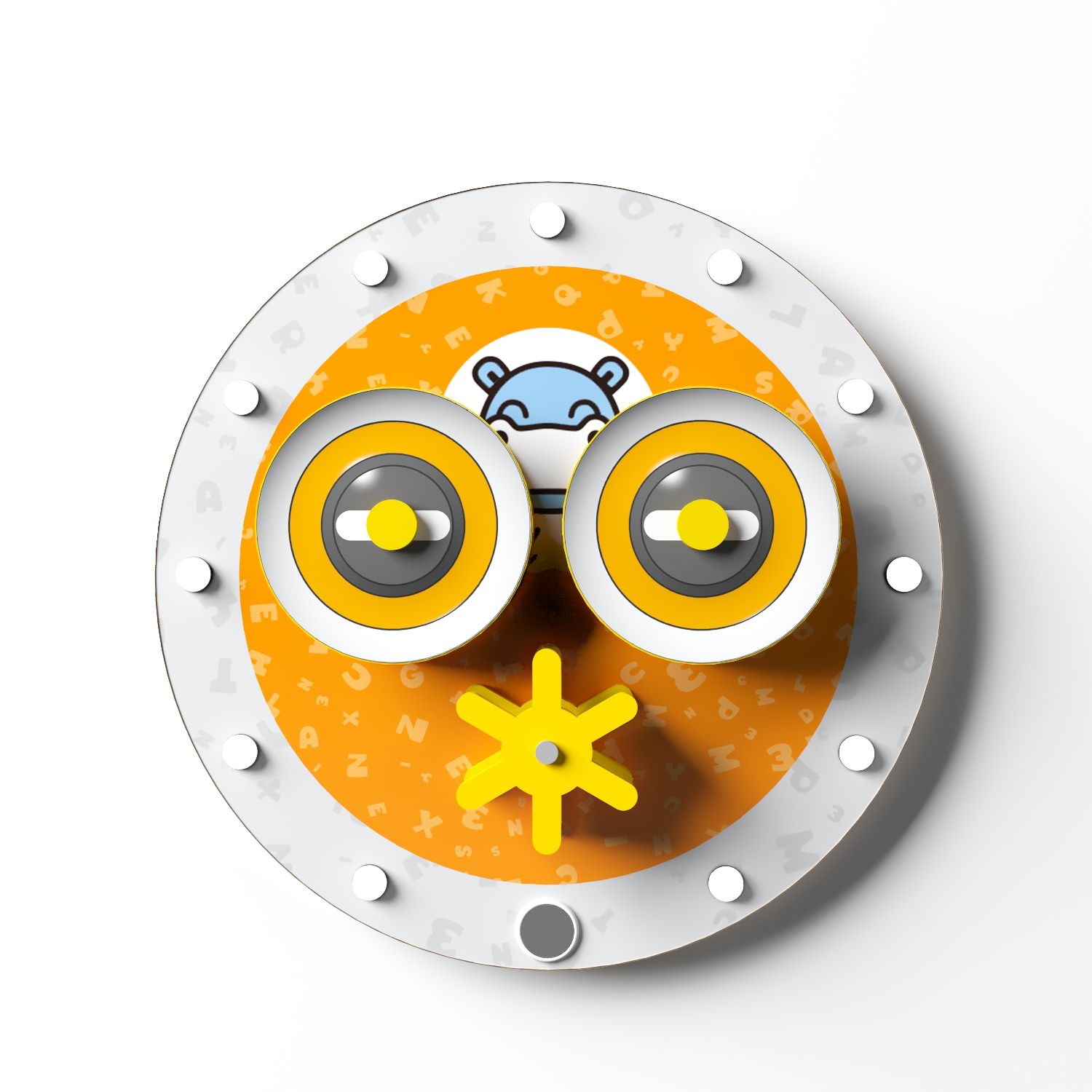
| 01 | Gear Wall | Ten interlocking gears turn together; move one and the whole set follows | 1200 × 1200 × 200 mm | Fire-retardant board, PE, PC |
| 02 | Pipe Wall | Ball drops into the funnel and runs through a pipe circuit before exiting | 1200 × 1200 × 200 mm | Fire-retardant board, PE, PC |
| 03 | Fork Wall | Ball threads down a field of shifting forks | 1200 × 1200 × 200 mm | Fire-retardant board, PE, PC |
| 04 | Rotating Wall | Ball spins a triangular fork wheel on its way down | 1200 × 1200 × 200 mm | Fire-retardant board, PE, PC |
| 05 | Track Wall | Ball follows a rail path from the inlet to the outlet | 1200 × 1200 × 200 mm | Fire-retardant board, PE, PC |
| 06 | Maze Wall | Ball enters a rotary drum and leaves through the turning maze | 1200 × 1200 × 200 mm | Fire-retardant board, PE, PC |
| 07 | Path Wall | Ball weaves between fixed pegs and drops out at the bottom | 1200 × 1200 × 200 mm | Fire-retardant board, PE, PC |
| 08 | Robot Wall | Peg field and fork zone combined in one figure | 1200 × 1200 × 200 mm | Fire-retardant board, PE, PC |
| 09 | Tipping Hopper Wall | Ball fills a hopper, the hopper tips and releases the load | 1200 × 1200 × 200 mm | Fire-retardant board, PE, PC |
| 10 | Spiral Wall | Ball travels a spiral tube from top to bottom | 1200 × 1200 × 200 mm | Fire-retardant board, PE, PC |
| 11 | DIY Knob Wall | Child turns a knob to steer the ball through a fork zone | 1200 × 1200 × 200 mm | Fire-retardant board, PE, PC |
| 12 | Multi-Track Wall | Several parallel tracks run side by side for racing balls | 1200 × 1200 × 200 mm | Fire-retardant board, PE, PC |
Standard module: 1200 x 1200 x 200 mm, wall-mounted. Panels can be supplied powered or unpowered, in custom colours and with your own graphics. Runs are designed to your exact wall length; corner and column wraps are built to order.
Where this equipment works
Common questions
How much wall space does a ball wall need?
A single panel starts around 1.2 m wide; full themed runs typically span 3–8 m. We design to your exact wall dimensions and can wrap corners and columns.
Powered or unpowered — which should we choose?
Unpowered walls suit venues that want zero maintenance and quiet operation. Powered walls move balls continuously and suit high-throughput areas where staff can keep an eye on the mechanism.
Is it safe for young children?
Panels use rounded HDPE and shatter-resistant PC with no exposed fasteners. Ball size and channel gaps are specified for the target age group, and we supply fixing drawings for solid, stud or masonry walls.
Send your floor plan, get a line-by-line quotation
Tell us the site dimensions, target age group and budget range. Manager Liu replies with a layout proposal, specifications and itemised pricing — usually within one working day.